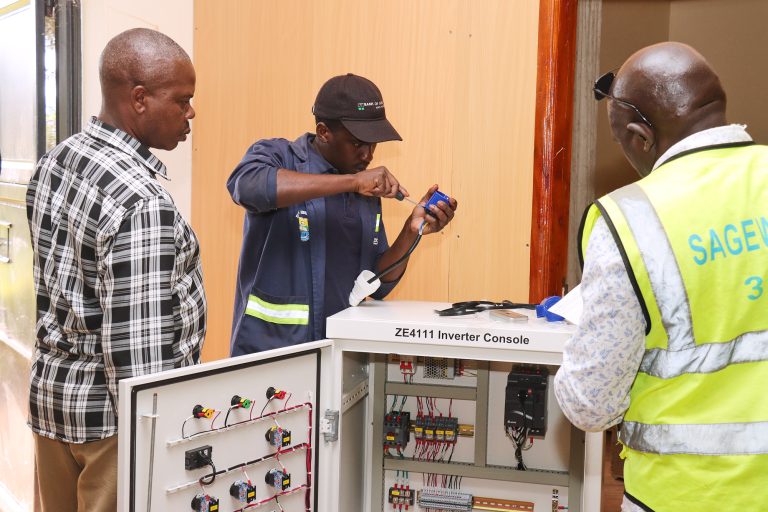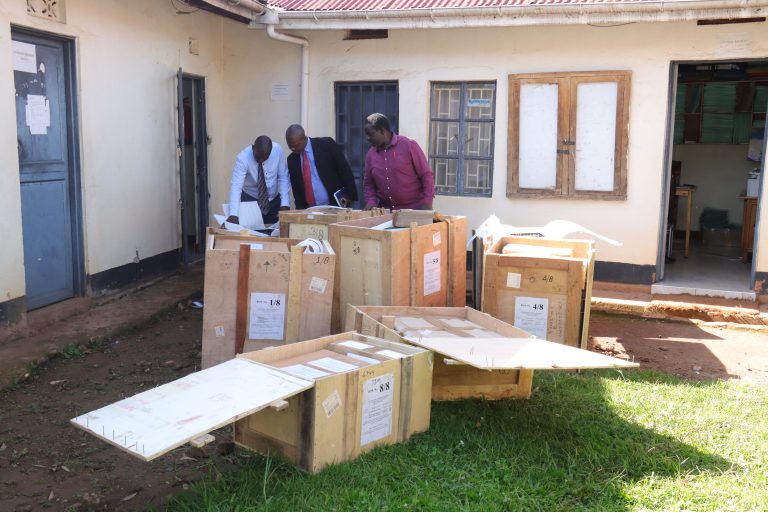



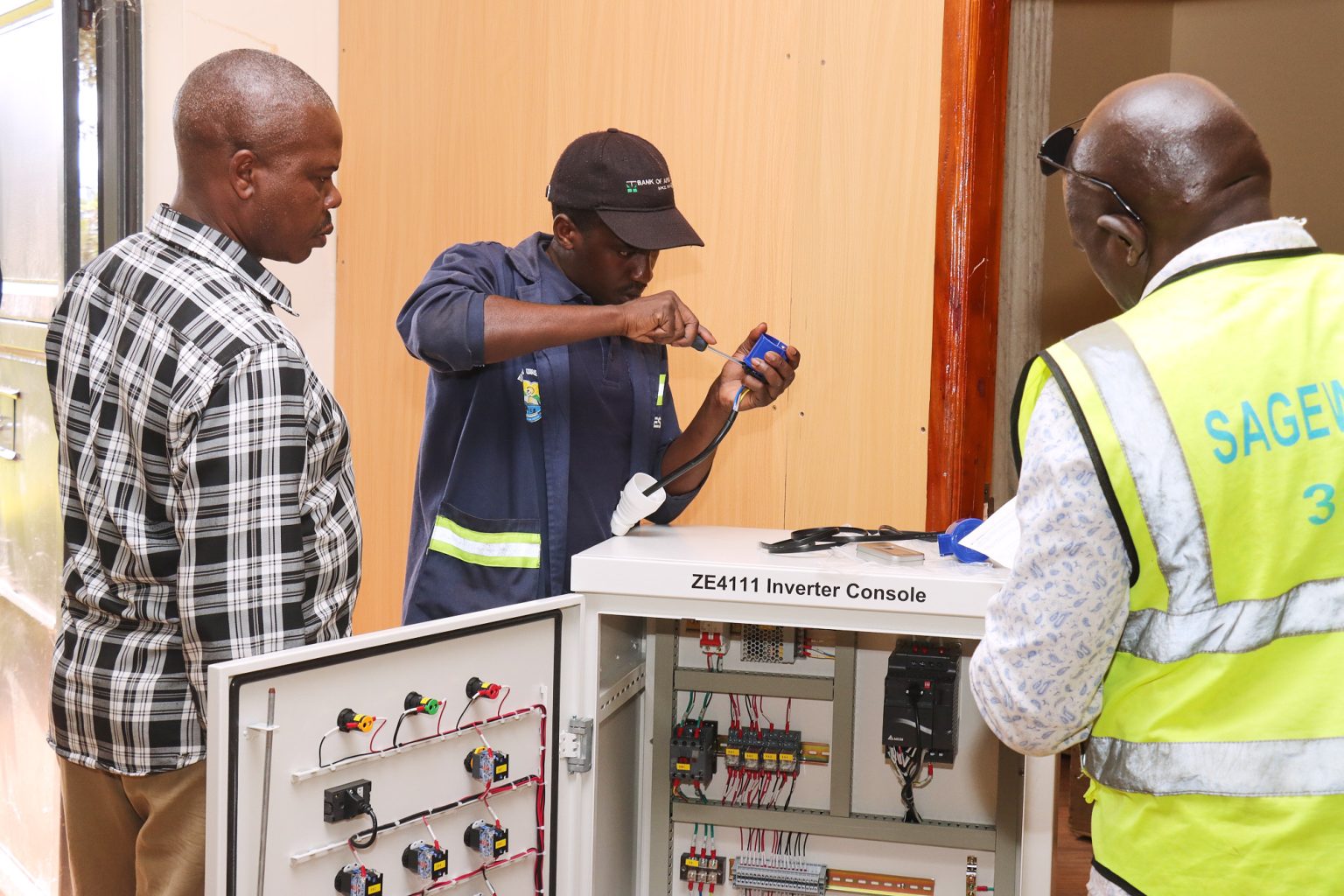
 Kabale University has successfully completed a technical training programme for staff who will support the operation and maintenance of Green Laboratory equipment acquired under the NISHATI Project. The training was conducted by SAGEWOOD Limited and focused on equipping University technicians with the practical knowledge required to effectively utilize the newly acquired renewable energy technologies.
The training brought together technicians from the Departments of Mechanical Engineering and Electrical Engineering, who received hands-on instruction on the operation, maintenance, safety procedures and troubleshooting of various equipment delivered under the project. Much of the equipment incorporates modern renewable energy technologies designed to enhance practical learning in areas such as solar energy, wind power and energy storage systems.
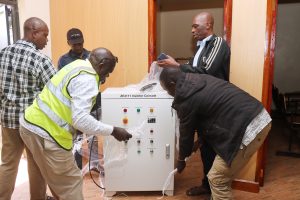 The Green Laboratory equipment will play a key role in strengthening experiential learning and supporting the delivery of NISHATI courses through practical demonstrations, laboratory exercises, research and innovation activities. By building local technical capacity, the University is ensuring the sustainability and effective utilization of the facilities for years to come.
Speaking during the training, Mr. Godfrey Joseph Sempungu, the NISHATI Project Leader at Kabale University, noted that the acquisition of the equipment represents a significant milestone in enhancing the University’s practical training capabilities.
“The acquisition of these machines marks very good progress for Kabale University’s hands-on training abilities,” he remarked.
The training also received support from the Faculty of Engineering, Technology, Applied Design and Fine Art, where the Green Laboratory will contribute to strengthening practical skills development among students.
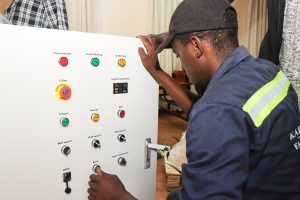 Dr. Cartland Richard, Head of the Department of Electrical Engineering, expressed optimism that the Green Laboratory established through the NISHATI Project would significantly improve practical training opportunities for students. He emphasized that the facility will support workshops, internships, project-based learning and innovation activities aligned with national and international standards.
The Green Laboratory is expected to provide students with opportunities to design, test, and prototype sustainable energy solutions while gaining valuable industry-relevant skills. Through these investments, the NISHATI Project continues to contribute towards transforming higher education through innovative teaching approaches that combine theoretical knowledge with practical competencies.
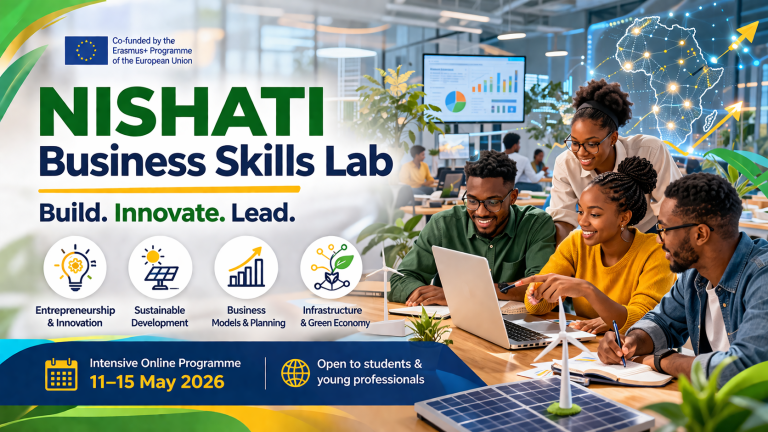
Co-funded by the Erasmus+ Programme of the European Union, the NISHATI Project seeks to strengthen higher education institutions in East Africa through enhanced training in water management, renewable energy, and sustainable agriculture while promoting climate resilience and sustainable development.